 The Wildbrook Company
A child writes fast. They miss half of what the teacher said, copy a formula wrong, abbreviate something they won't recognize in a week. Then they revise from that page as though it were complete.
Most study apps take those notes and make them tidier. ClariPage reads them, fills what's missing, and then shows you exactly which parts came from where.
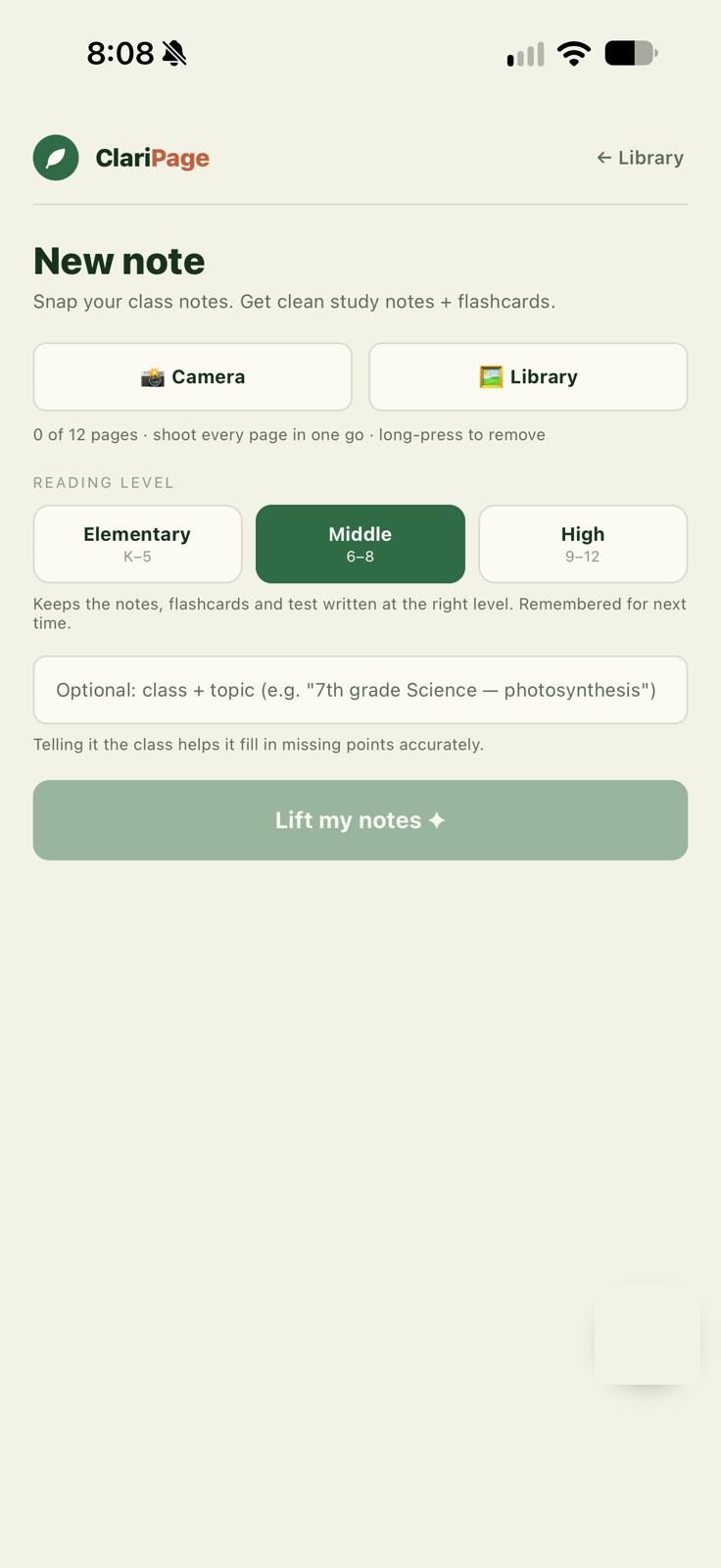
Every point is labeled
| your notes | What your child actually wrote, tidied up but unchanged in meaning. |
| from the handout | Text that came off a printed or typed page rather than their handwriting. |
| added | Not on the page. Filled in because the topic needs it. |
| fixed | The page said something factually wrong. This is the correction. |
| reference | Drawn from study material you added to your own library. |
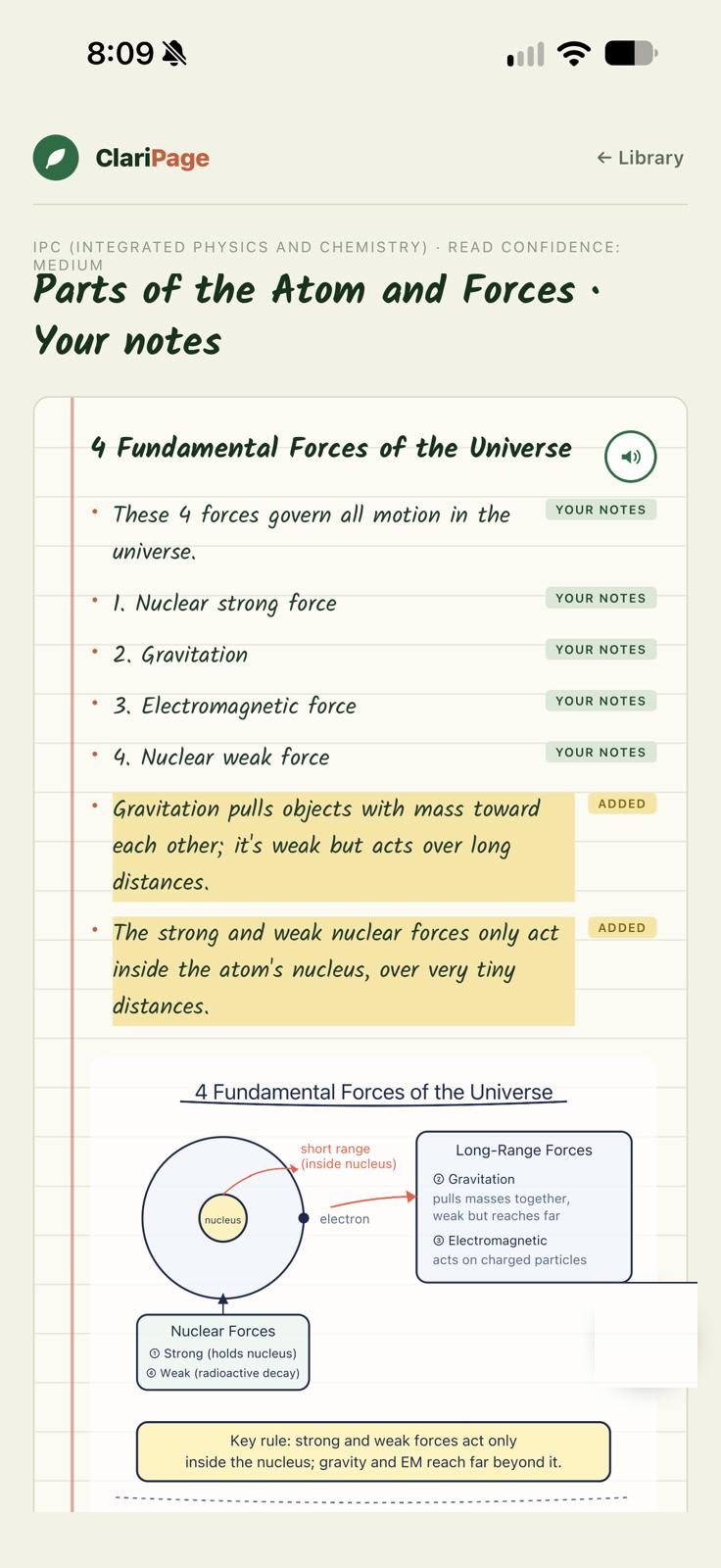
Nothing is blended together. You can always separate your child's work from the machine's, which means a student knows what to trust, and a parent can see how much was actually captured in class.
It tells you what was missed
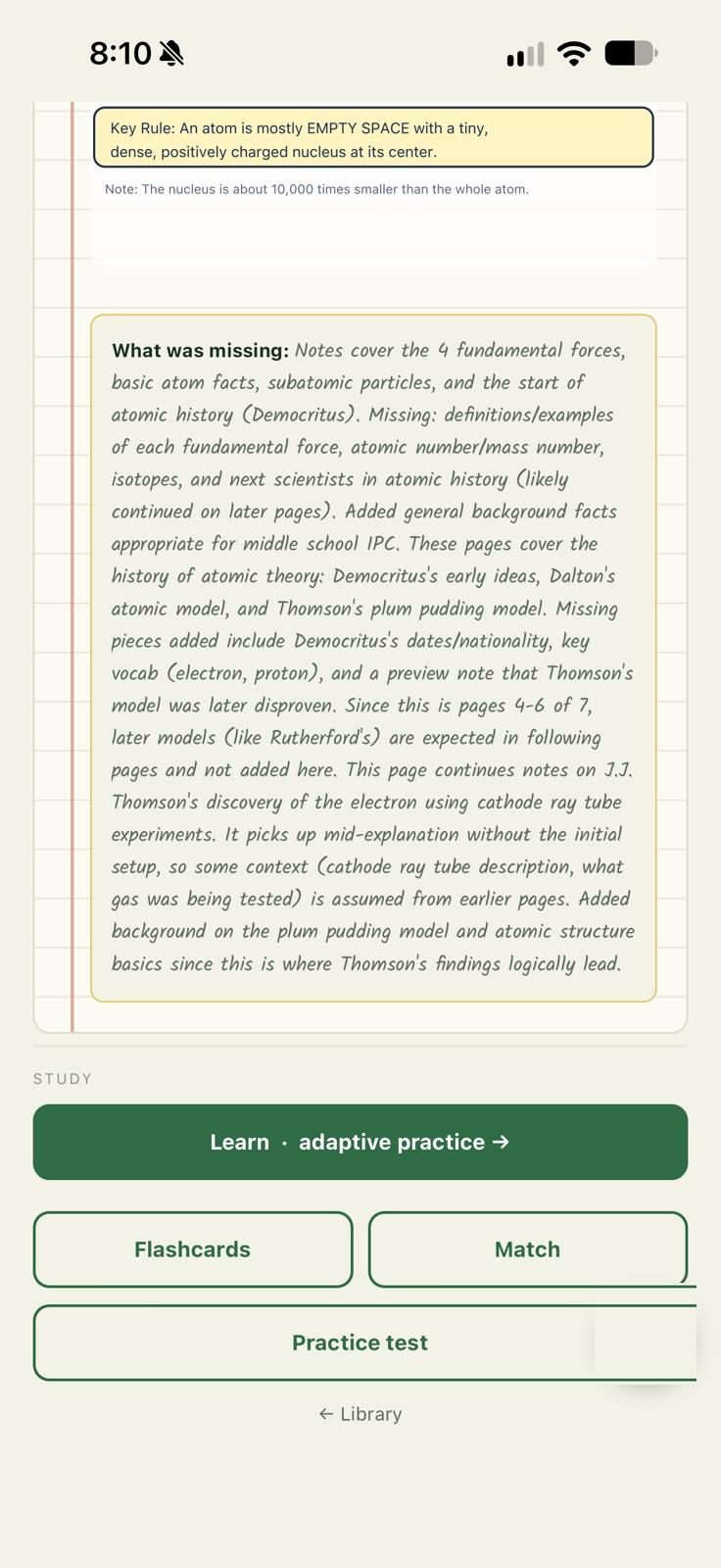
Every study set ends with a plain summary of what the notes left out. Take a practice test and you get two scores: how they did on material they wrote down, and how they did on material their notes had missed.
A child scoring well on the first and badly on the second doesn't have a studying problem. They have a note-taking problem, which is fixable, and which a report card will never tell you.
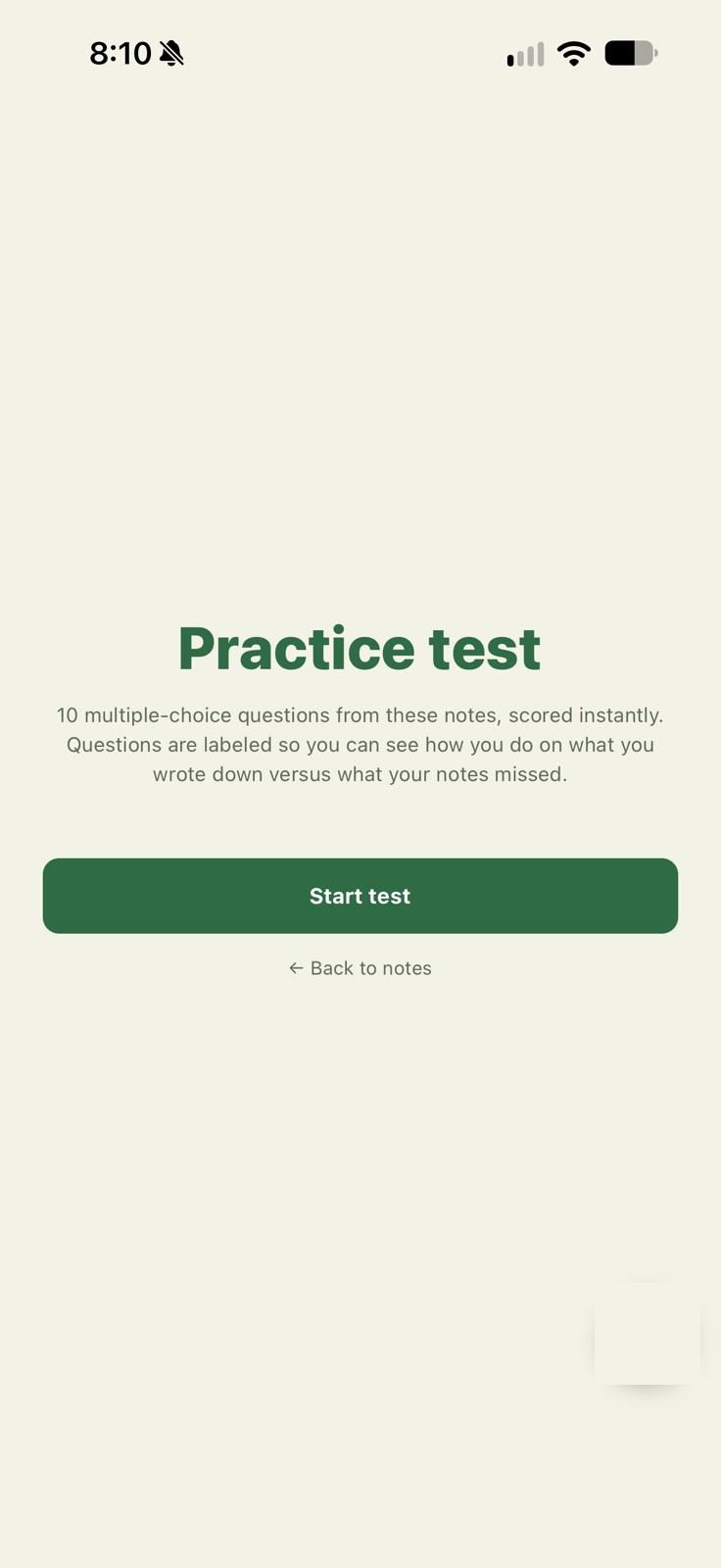
What one photograph gives you
- Organized notes written at the right reading level for the child
- Explanatory diagrams, drawn only where a diagram genuinely helps
- Flashcards, adaptive practice, a matching game, and a practice test that gives feedback on every answer
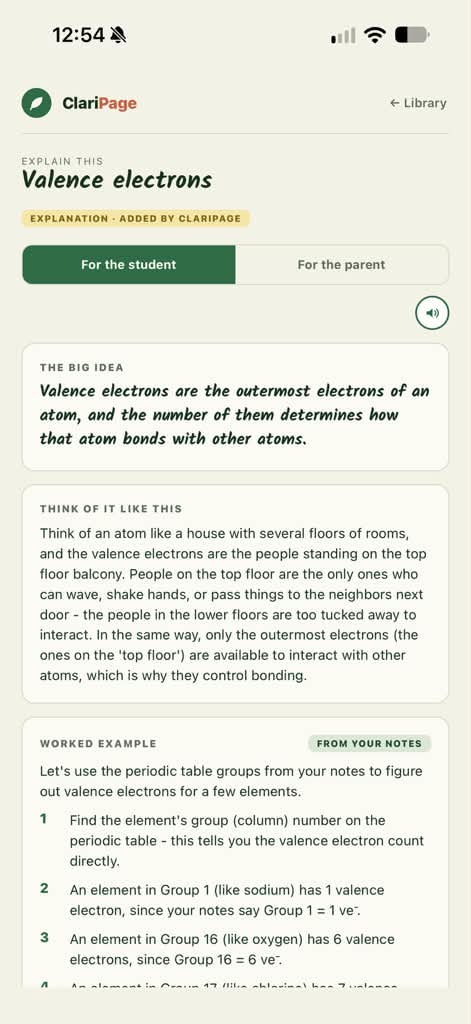
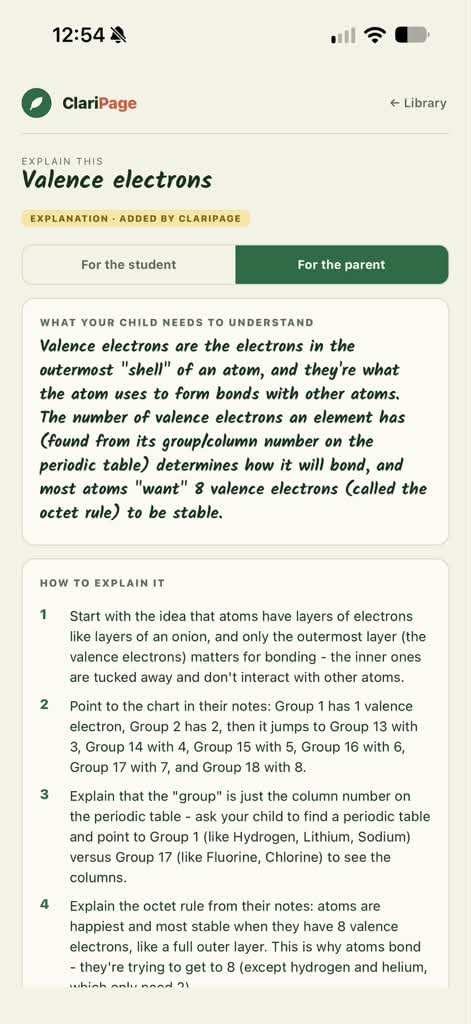
- An "Explain this" button on every section, for when an idea doesn't click, with a version written for parents
- A review queue that brings cards back just before they'd be forgotten
- Read-aloud throughout, which for younger children is the difference between studying alone and needing a grown-up
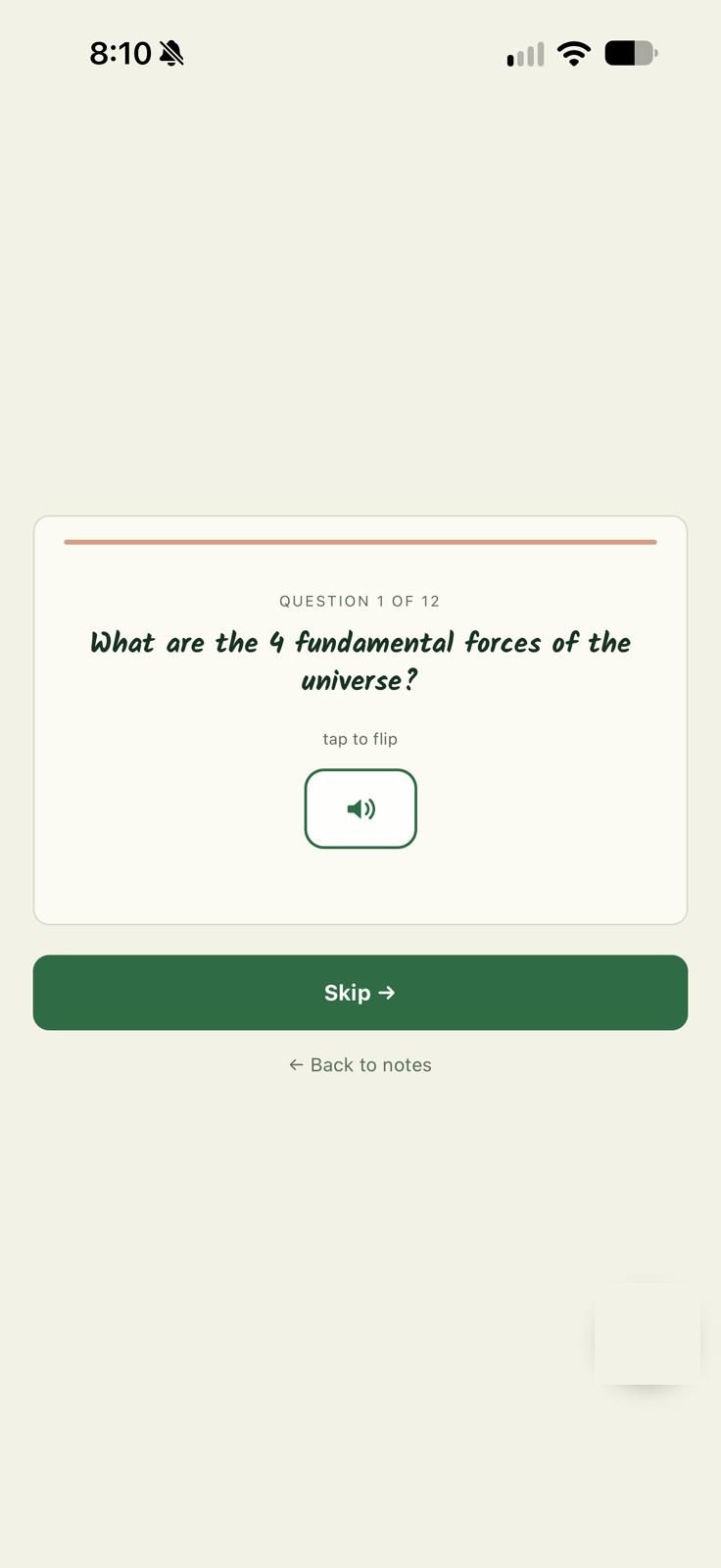
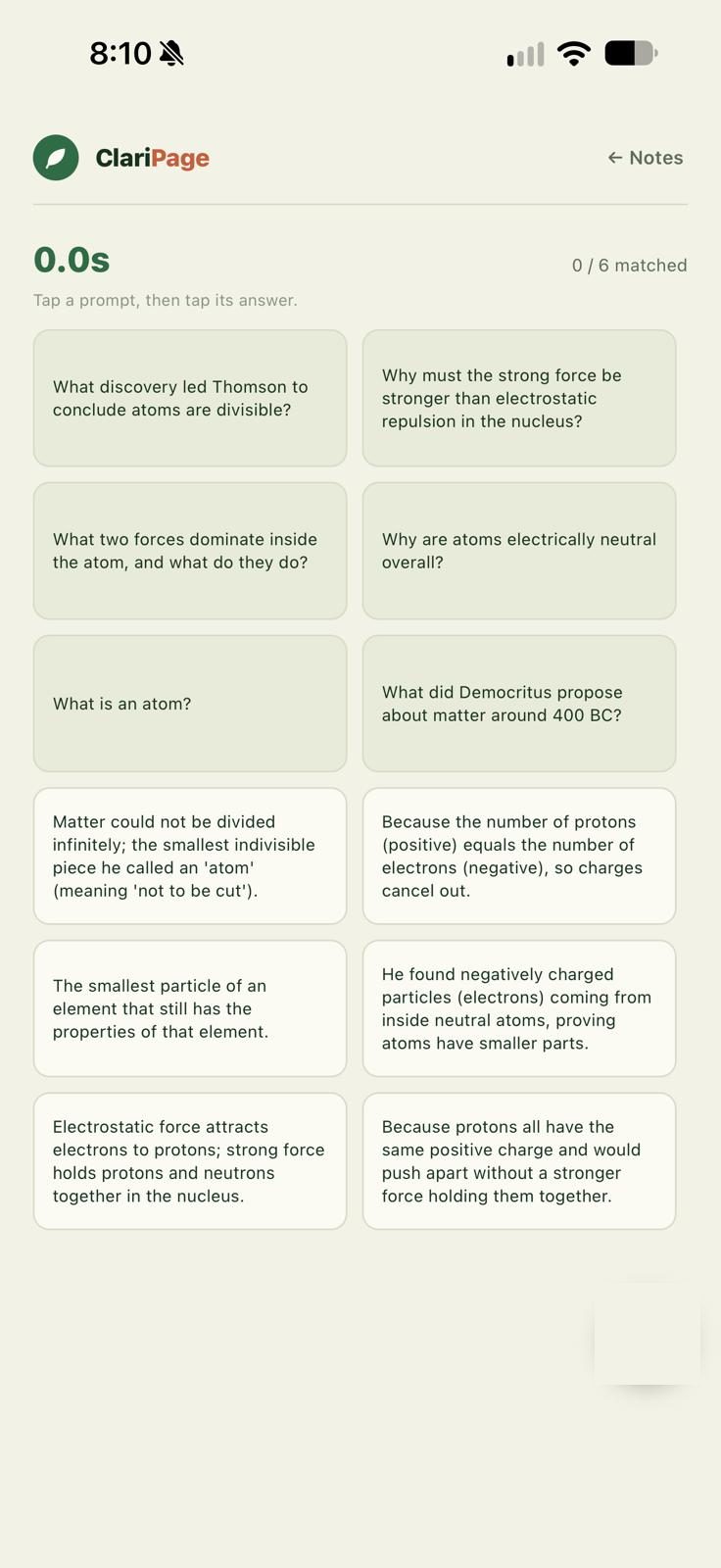
Studying is never rationed. Capturing a page has a monthly limit because it costs us money to process. Reviewing, practicing and testing don't, and never will. Charging a child for the act of studying gets the product backwards.
When an idea doesn't click
Good notes are still summaries. They assume the idea already makes sense. When it doesn't, tap Explain this on any section and ClariPage teaches the concept from the ground up: the big idea in one sentence, an everyday comparison, a worked example built from the student's own notes, the most common mix-up, and a three-question check to see whether it landed.
There's a second view, written for the parent sitting alongside: what the child needs to understand, how to explain it, the mistakes to listen for, and questions to ask, each with what a good answer sounds like. Most parents haven't thought about domain and range in years. They shouldn't need to relearn it alone to help.
Built for families
A parent or teacher holds the account. Children study on it and never hand over their own details. There is no advertising, there are no trackers, and nothing about your child is profiled or sold. Photographs are processed and discarded rather than stored.
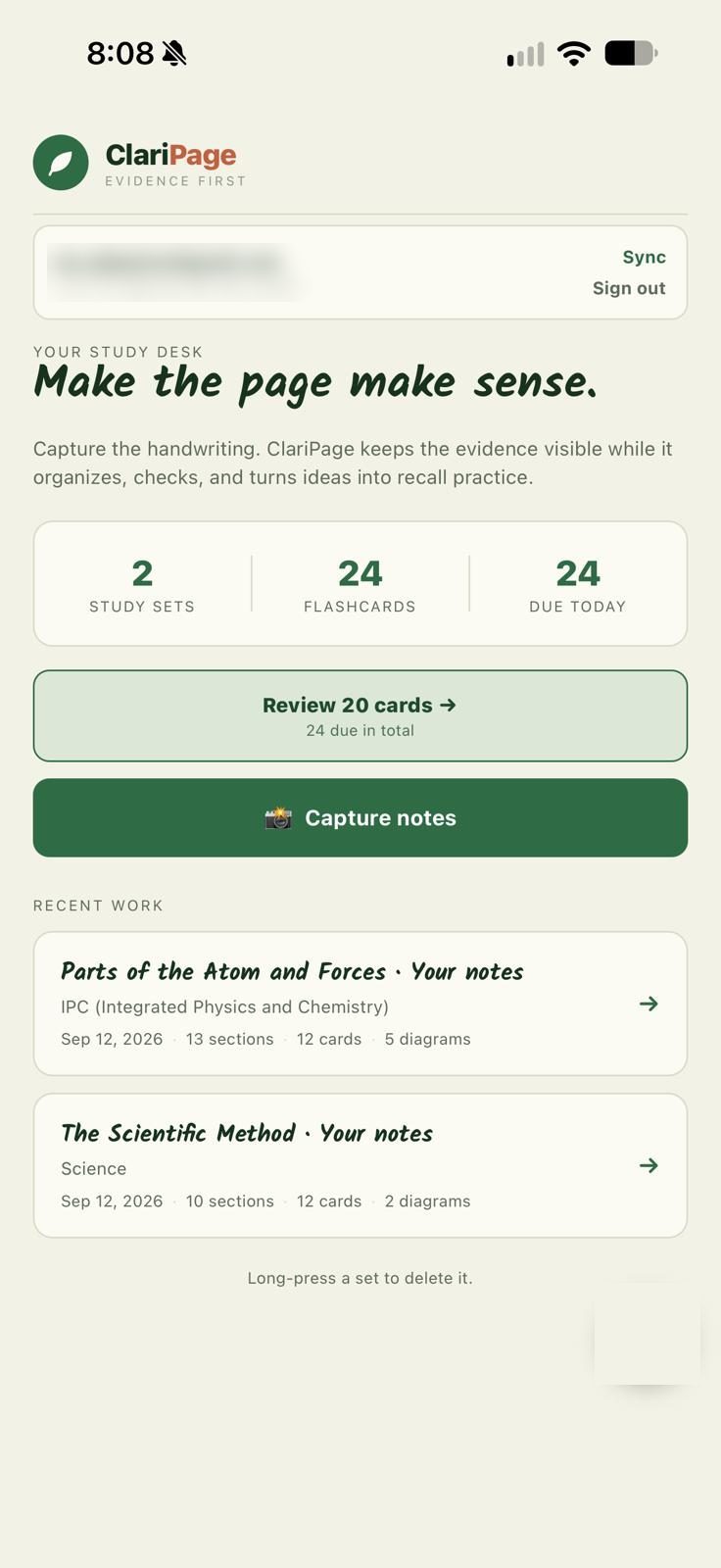
ClariPage is in testing and not yet publicly available.
Read how it works, or why we built it.