 The Wildbrook Company
The problem isn't studying. It's what's on the page.
Most study apps assume the notes are already good. They take what a student wrote down and turn it into flashcards, quizzes, summaries.
But the notes usually aren't good. A child writes fast, misses half of what the teacher said, copies a formula wrong, abbreviates something they won't recognize in a week. Then they revise from that page as though it were complete. They study hard, do badly, and nobody can explain why.
A tool that polishes incomplete notes just produces confident, well-formatted gaps.
So we show the seams
ClariPage fills in what a page is missing. That part isn't unusual. Plenty of tools will happily generate more.
What's unusual is that every point carries a label saying where it came from: what the student wrote, what came off a handout, what was added because the notes left it out, what was corrected because the page had it wrong.
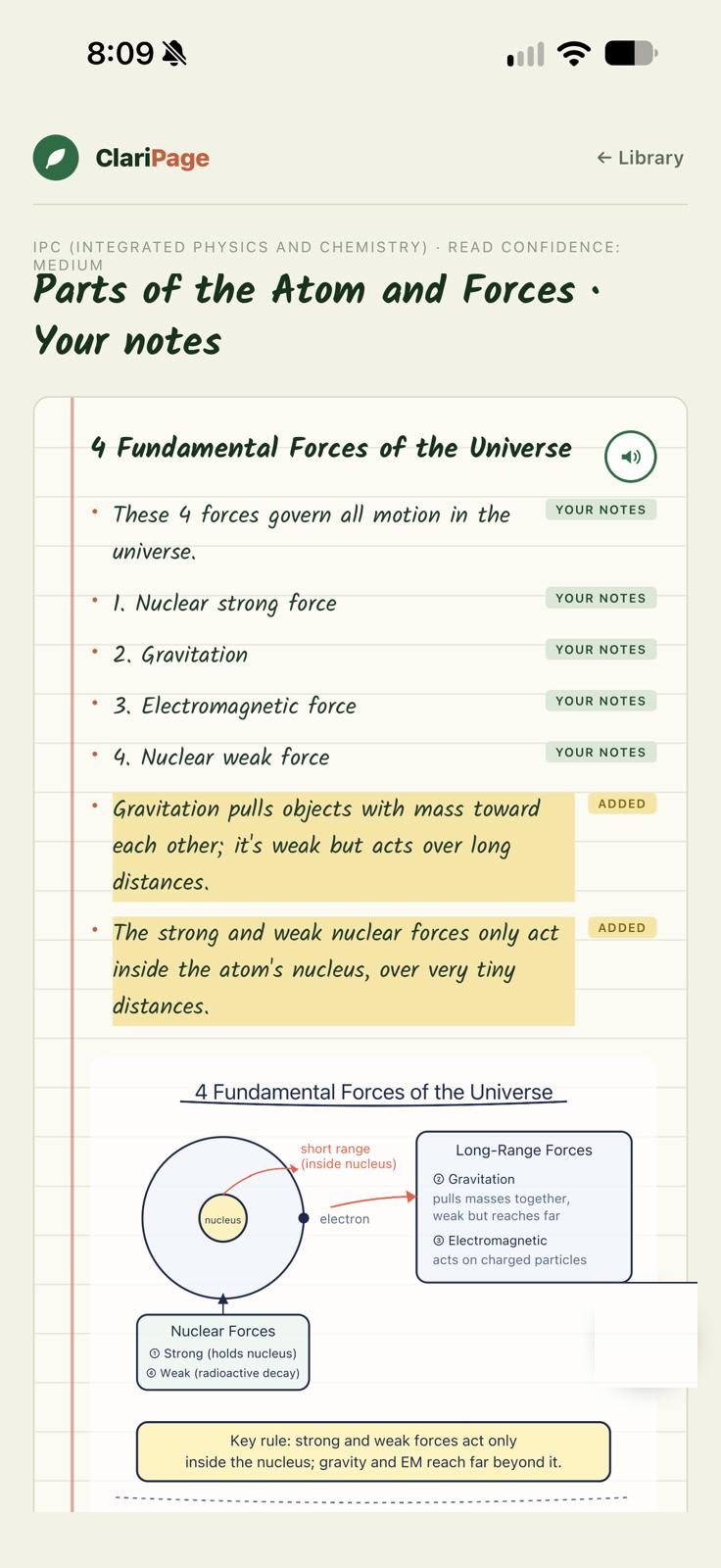
Why a label matters more than it sounds
A student can trust it. When an app hands you a page of confident text, you have no way to know which parts to believe. A labeled page tells you what rests on your teacher's words and what doesn't.
A parent can check it. You can see how much your child captured and how much had to be supplied. That's a real answer to "how is school going", and not one a grade gives you.
A teacher isn't undermined. What was taught stays visibly distinct from what a model added.
And it turns a weakness into information. The practice test reports two scores. A child who does well on their own notes and badly on added material has a note-taking problem, not a studying problem. That's fixable, and invisible on a report card.
What we believe
Evidence first. A study tool should make its sources visible. If we can't show where something came from, we shouldn't be asking a child to memorise it.
Better notes, not fewer notes. The goal is a student who takes better notes next term, not one who stops taking them because an app will do it. So we name what they missed, every time.
Studying should never be rationed. Capturing a page costs us money and is limited. Reviewing, practicing and testing cost almost nothing and are not. Charging students for the act of studying gets it backwards.
Write for the child in front of you. Notes for a seven-year-old shouldn't read like notes for a sixteen-year-old. Pick the reading level and everything follows it: the notes, the flashcards, the questions, even how busy the diagrams are.
The adult holds the account. Children study on a parent's or teacher's login. They don't hand over their details, and the adult can see and delete everything. That was a design decision before it was a legal one.
Say what it can't do. ClariPage reads handwriting well and still sometimes misreads it. It draws diagrams that teach and occasionally draws one that's wrong. We'd rather a student check a diagram than trust it blindly.
Who it's for
Families, mostly. A parent who wants to help with revision and hasn't time to rewrite a notebook. A student whose own messy pages should be usable. A teacher turning a handout into practice without losing track of what came from where.
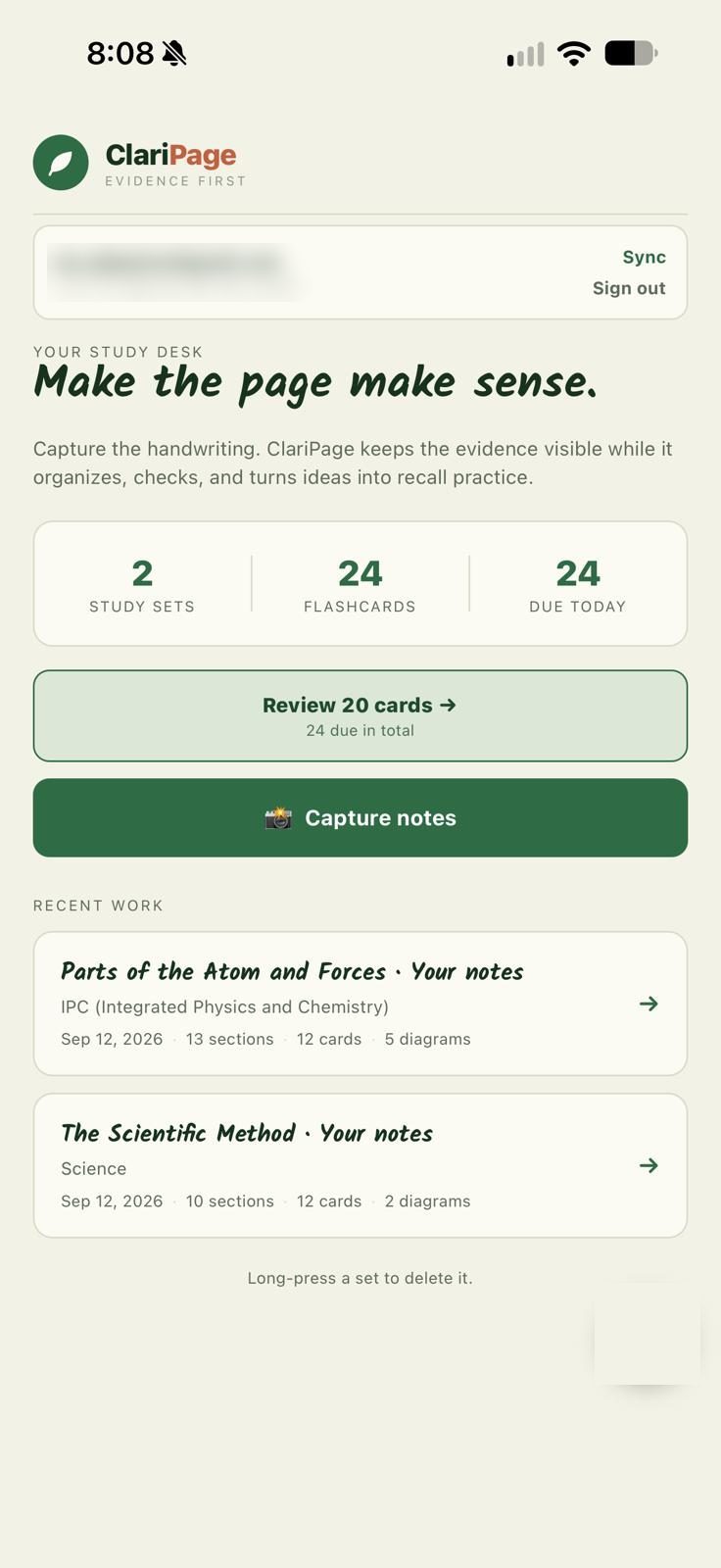
It started at one kitchen table, with a pile of science notes that were missing more than they contained.